
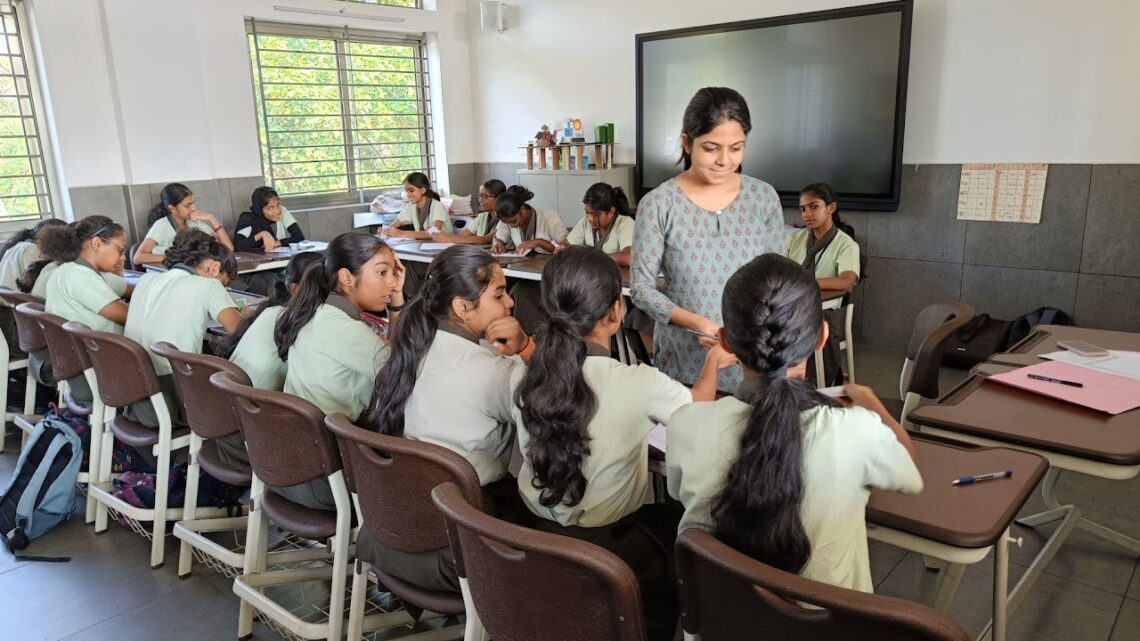
Education for Ecological Transformation is a dynamic international research program that aims to create climate-aware youth by fostering environmental consciousness and behavioural change among school students. The program is jointly funded by the Max Planck Society, Munich and the University of Innsbruck, Austria. The program is led by two researchers based in Europe: Prof. Esther Blanco, a Professor of Economics in the Department of Public Finance at the University of Innsbruck, Austria, and Dr. Raisa Sherif, a behavioural economist at the Max Planck Society in Munich.
Currently, the program is being implemented in schools across Spain and Austria. In India, the programme is led and implemented by VentureVillage, having successfully completed pilot phases and now expanding across multiple schools.
About the Program
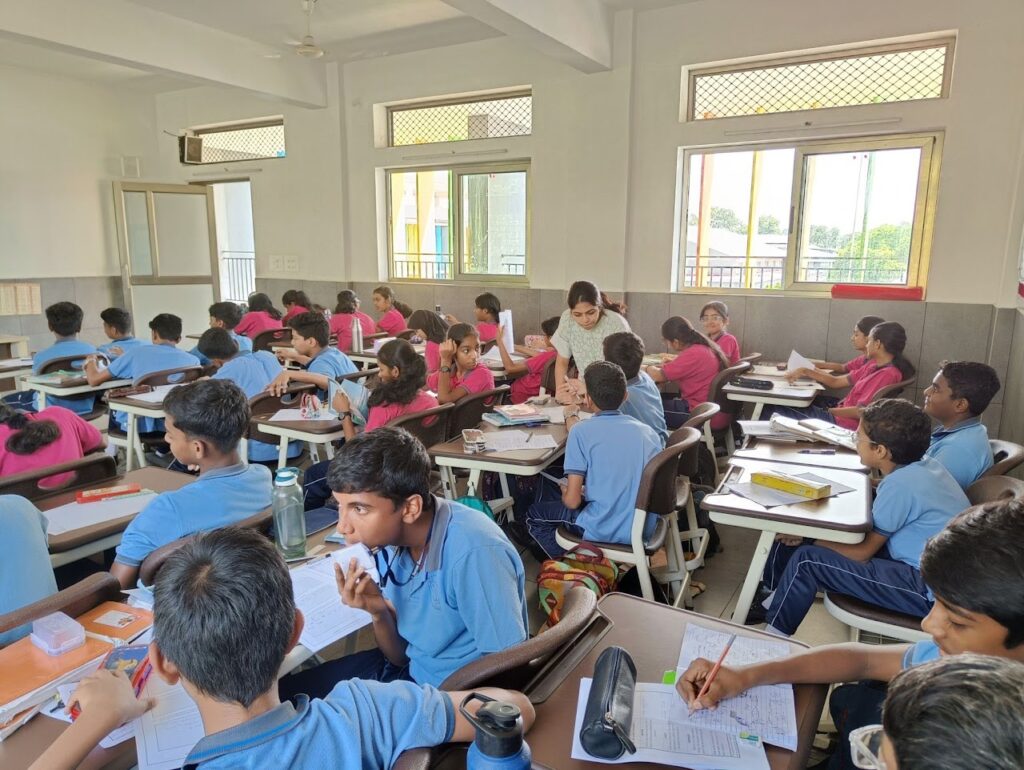
The Education for Ecological Transformation program investigates how raising climate change awareness in young people can influence their environmental values and behaviours. The goal is to help students understand the connection between individual actions and collective environmental outcomes.
Students engage in interactive games, group activities, and thought-provoking exercises that encourage them to reflect on questions like:
“What can we do about climate change?” and “How do my actions impact the environment?”
The curriculum is designed to enable students to:
- Understand the science and social implications of climate change
- Reflect on behavioural change as a means of climate action
- Cultivate a sense of personal and collective responsibility and empowerment
Program Goals
Short-Term:
To cultivate awareness and personal responsibility for climate action among school students by helping them identify small behavioural shifts that can lead to significant ecological impact.
Long-Term:
To nurture a generation of climate-conscious citizens who will lead sustainable initiatives in their homes, schools, and communities. The program aims to build 21st-century skills such as systems thinking, behavioural insight, and environmental leadership.
Learning Approach
The program promotes:
- Experiential Learning – Interactive games and reflections that help students internalize complex climate concepts.
- Critical Thinking – Students are encouraged to question, analyse, and co-create ideas for a sustainable future.
- Collaborative Engagement – Activities foster peer learning, group collaboration, and shared problem-solving.
- Local Relevance – Students link global climate issues to their local environment, making learning more impactful.
Outcome
By participating in this program, students gain:
- A deeper understanding of climate issues and ecological responsibility
- Skills to reduce their ecological footprint
- The motivation and tools to take meaningful action at a personal and community level
Pilot Implementation
The program was successfully piloted at St. Peter’s School in Kochi, Rajagiri Public School in Kochi, Alif Global School in Kozhikode, MES Kaithapoyil, and MES Thalassery, reaching over 570 students.
E4ET Programme 2025–26
The E4ET programme for the academic year 2025–26 marked a significant milestone, reaching and engaging over 1000 students across three schools: Global Public School, Kochi; Dayapuram Residential School, Calicut; and KMO Higher Secondary School, Calicut.
Global Public School, Kochi
The programme engaged 474 students from Grades 6 to 9 across 20 classrooms. The sessions were facilitated by a team of 18 facilitators and were conducted from July 2025 to March 2026.
Dayapuram Residential School, Calicut
The programme reached 414 students from Grades 6 and 7 across 11 classrooms. A team of 9 facilitators conducted the sessions between August 2025 and October 2025.
KMO Higher Secondary School, Calicut
A total of 215 students from Grades 6 to 9 across 8 classrooms participated in the programme. The sessions were led by a team of 6 facilitators and took place from October 2025 to January 2026.
What’s Next?
So far, the programme has reached 39 classrooms out of the targeted 90 classrooms. As we step into the next phase, we look forward to expanding into more classrooms and deepening our impact.At the heart of this journey is our continued commitment to empowering young learners to understand and take meaningful action on climate change. In the next phase, the programme is set to be implemented at the Government Vocational Higher Secondary School, Nadakkavu, as well as a few other schools.
If you would like your school to be part of this journey, we would love to hear from you. Write to us at info@venturevillage.world
Let’s work together to inspire the next generation of changemakers.
FAQ about E4ET Program for parents in English
E4ET പ്രോഗ്രാം: രക്ഷിതാക്കൾ സാധാരണയായി ചോദിക്കുന്ന ചോദ്യങ്ങൾ